









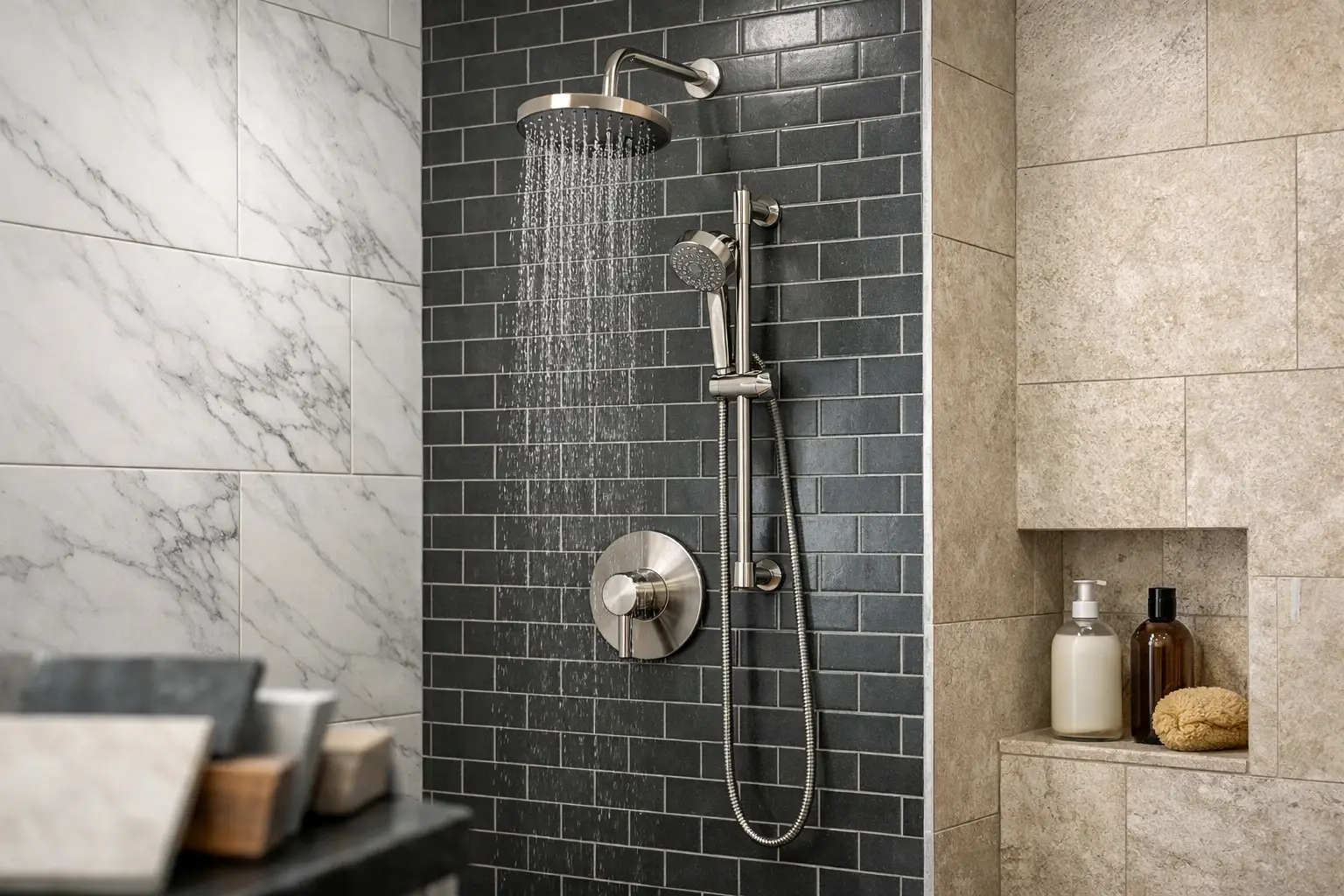
A shower can look exceptional on the day it is finished and still become a maintenance problem a few years later if the wrong material, grout, or installation method was chosen. The best tile for shower walls is not always the most expensive option or the trendiest one in the showroom. It is the tile that fits your bathroom’s use, your cleaning preferences, your budget, and the level of craftsmanship behind the wall.
For many Macomb County and Metro Detroit homeowners, porcelain is the most dependable starting point. But ceramic, glass, and natural stone each have a place when they are selected thoughtfully and installed over a properly waterproofed shower system.
Best Tile for Shower Walls: Porcelain Is the Dependable Choice
Porcelain tile is usually the best all-around choice for shower walls. It is dense, highly water-resistant, durable, and available in an enormous range of colors, sizes, and finishes. Homeowners can get the look of natural marble, warm limestone, painted zellige, or wood without taking on the same level of ongoing care.
Because porcelain absorbs very little water, it performs well in a shower that sees daily use. It also resists staining better than many natural materials and is less likely to show damage from ordinary bath products. For a family bathroom, a primary suite, or a bathroom addition built for long-term use, porcelain provides a practical balance of appearance and performance.
Porcelain also gives you design flexibility. Large-format porcelain can make a compact shower feel more open because there are fewer grout lines interrupting the walls. A 12-by-24-inch tile is a popular and versatile size, while larger panels can create a more continuous, modern look. Smaller porcelain tiles can add detail to a niche, accent wall, or shower bench.
The trade-off is installation. Large porcelain tiles must be set on very flat walls with the correct mortar coverage and careful layout. A skilled installer plans cuts around fixtures, niches, corners, and ceilings so the finished shower looks intentional instead of pieced together.
Ceramic Tile Is a Smart Value Option
Ceramic tile can be an excellent shower-wall material, particularly for homeowners who want a broad selection of colors and shapes at a more accessible price point. Classic subway tile, handmade-look tile, and many decorative wall tiles are ceramic. When installed correctly, ceramic can serve a shower well for years.
Ceramic is generally less dense than porcelain, so it is better suited to shower walls than shower floors. It should be a tile rated for wet-area wall use, and its edges, glaze, and installation details need to be considered before work begins. A quality glazed ceramic tile is easy to clean and gives homeowners plenty of room to personalize a bathroom without overspending on the field tile.
If you love a glossy subway tile or a softly varied artisan look, ceramic may be the right choice. Keep in mind that uneven or heavily textured tiles can make grout joints more noticeable and cleaning slightly more involved. That does not make them a poor choice – it simply means the design should match your expectations for maintenance.
Glass Tile Adds Light but Requires Precision
Glass tile is often selected for shower niches, accent bands, or feature walls because it reflects light in a way that porcelain and ceramic cannot. It can make a darker bathroom feel brighter and gives a shower a refined, custom detail.
However, glass is not automatically the best choice for every full shower wall. It is more demanding to install because the adhesive can show through translucent pieces, and lippage between tiles is more visible on reflective surfaces. Some glass tiles also require specific setting materials and grout choices recommended by the manufacturer.
A well-designed glass accent can be beautiful, especially when paired with a quieter porcelain field tile. For a full-wall application, careful planning is essential. The wall needs to be exceptionally flat, and the installer needs experience working with the material. This is one area where trying to save money on labor can lead to visible problems.
Natural Stone Creates Character, With More Maintenance
Marble, travertine, limestone, and slate bring natural variation that manufactured tile cannot fully duplicate. Each piece has different veining, movement, and color, which can give a primary bathroom a one-of-a-kind appearance. When a homeowner wants a timeless, high-end look, natural stone can be a strong choice.
It also requires a realistic maintenance commitment. Many natural stones are porous and need sealing. Some can etch or discolor from acidic cleaners, standing water, or certain personal-care products. Stone showers should be cleaned with products appropriate for natural stone, not harsh chemicals that can damage the surface or sealer.
Natural stone is best for homeowners who appreciate its variation and are comfortable with the care it requires. It is not the most carefree option for every busy family bathroom. Selecting the right stone, finish, sealer, and grout is just as important as choosing the color.
Tile Size Changes How a Shower Looks and Cleans
Tile size is not only a design decision. It affects grout maintenance, layout, and how well the tile works with the room’s proportions. Large-format tile means fewer grout joints, which many homeowners appreciate for a cleaner, more streamlined appearance. It can be especially effective on the main shower walls in a contemporary bathroom.
Smaller tiles offer their own advantages. They can follow curves, fit inside niches with less awkward cutting, and create visual texture. Mosaic tiles are commonly used for shower floors because their many grout joints improve traction, but they can also work as a feature on a wall or inside a niche.
The best approach is often a combination. Large porcelain tiles on the shower walls can keep the space calm and easy to maintain, while a smaller mosaic or contrasting tile adds interest in the niche or on the floor. The materials should feel coordinated without competing for attention.
Grout and Waterproofing Matter as Much as the Tile
A beautiful tile cannot compensate for poor preparation behind it. Tile and grout are finish materials, not the waterproof layer of a shower. A properly built shower needs a reliable waterproofing system behind or beneath the tile, with careful treatment at corners, seams, the shower pan, plumbing penetrations, benches, and niches.
Grout choice matters, too. Cement-based grout remains a common and attractive option, but it may require sealing depending on the product. Epoxy grout offers excellent stain and moisture resistance and can be a good option for high-use showers, although it costs more and requires experienced installation. The right grout color can either minimize the grid of joints or make the tile pattern a deliberate design feature.
At Renovation Innovations, shower tile planning begins with the whole assembly, not just the sample board. Proper wall preparation, waterproofing, layout, and clean finishing details are what help a shower hold up after years of daily use.
Choose a Finish That Fits Your Routine
For shower walls, polished and glossy tiles can reflect light and make a small bathroom feel brighter. They also tend to wipe clean easily. Matte finishes create a softer, more contemporary appearance and can hide water spots better, but heavily textured surfaces may hold soap residue more readily.
Consider where the tile will be installed. A glossy tile may be ideal for the main walls, while a textured tile may work better as a visual accent than across every surface. In a bathroom with hard water, a mid-tone tile and grout can be more forgiving than bright white or deep charcoal. These practical details often make the difference between a bathroom you enjoy and one that feels hard to keep clean.
Plan for the Details Before Ordering Tile
Before purchasing tile, confirm the actual dimensions of the shower and the location of valves, showerheads, niches, benches, windows, and ceiling transitions. A tile that looks perfect on a showroom display may create narrow slivers at corners or awkward cuts around fixtures in your specific space.
Ask how the tile will be laid out, where full tiles will begin and end, and whether the niche will align with grout joints. If you are using a directional pattern, marble-look veining, or handmade-look tile with noticeable variation, review the layout before installation begins. Ordering extra material is also wise because tile can vary between production runs and repairs are easier when matching pieces are available.
The right shower wall tile should make your bathroom feel finished, personal, and built for real life. Choose a material you will be comfortable maintaining, then give equal attention to the waterproofing and installation details that protect everything behind it.
