









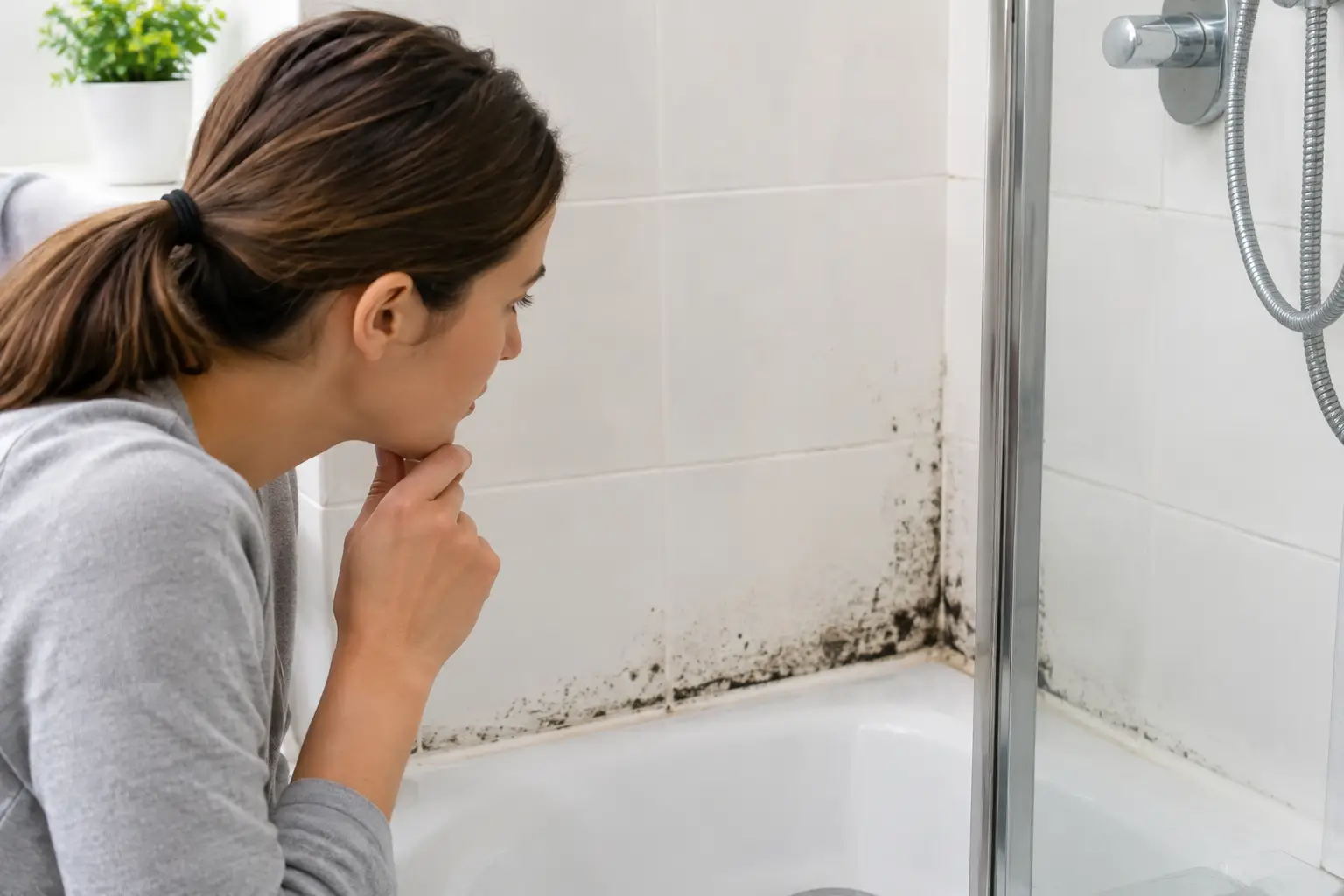
A dark line at the shower caulk, spots around a ceiling vent, or a musty smell after a shower is more than a cleaning annoyance. Homeowners often ask what causes bathroom mold growth after they have scrubbed the same area repeatedly, only to see it return. The short answer is moisture, but the real source can be poor ventilation, a hidden leak, failing finishes, or a bathroom layout that never gets a chance to dry properly.
Mold needs three things to grow: moisture, a food source, and time. Bathrooms provide all three when humid air lingers, water gets behind finished surfaces, or soap residue and dust collect in damp corners. Finding the reason moisture remains in the room is the step that prevents the problem from becoming a repair or renovation issue.
What Causes Bathroom Mold Growth Most Often?
The most common cause is excess humidity that stays in the bathroom after bathing. A hot shower fills a small room with moisture quickly. If that humid air is not exhausted outdoors, it condenses on cooler surfaces such as walls, ceilings, windows, mirrors, and tile. In Michigan, this can be especially noticeable during colder months, when exterior-facing walls and windows stay cool while the bathroom is warm and steamy.
An exhaust fan that is undersized, clogged with dust, vented into an attic, or simply not used long enough cannot remove enough moisture. A fan should move humid air outside, not just make noise. If the mirror stays fogged for a long time after a shower, paint peels near the ceiling, or the room feels damp well after use, ventilation deserves a closer look.
Bathrooms without an exhaust fan rely heavily on an operable window, but a cracked window is not always a practical or sufficient solution during Metro Detroit winters. Opening it can help, but it may not move moist air out as consistently as a properly installed, exterior-vented fan.
Leaks Create Mold Where You Cannot See It
Not every mold issue starts on the surface. A slow plumbing leak can keep drywall, subflooring, insulation, or framing damp for weeks or months. Leaks may come from a supply line, drain connection, toilet wax ring, shower valve, tub overflow, or a failed seal around the shower enclosure.
Watch for a soft bathroom floor, loose tile, staining on the ceiling below a bathroom, swollen baseboards, cracked grout that keeps returning, or a persistent musty odor. These signs do not always prove there is a leak, but they are worth investigating promptly. Surface cleaning will not correct mold that is being fed by water behind the wall or under the floor.
A shower can also leak because its waterproofing system has failed. Tile and grout are finish surfaces, not the primary waterproof barrier. If a shower was installed without proper waterproofing behind or beneath the tile, water can work into the assembly even when the tile looks mostly intact. This is one reason detail-focused installation matters in a bathroom remodel.
Failing Caulk, Grout, and Paint Let Moisture Linger
Caulk at the tub, shower pan, corners, and plumbing penetrations has a demanding job. It needs to remain flexible while the materials around it expand, contract, and move slightly. Once caulk splits, pulls away, or develops gaps, water can enter places it was never meant to reach.
Grout needs attention too, particularly in high-use showers. Cracked or missing grout can allow more water into joints, although it is not automatically proof that a shower is leaking. The condition of the substrate, waterproofing, and surrounding sealant all matter. Regrouting or recaulking may be an appropriate small repair when the underlying installation is sound. If the wall feels soft, tile is loose, or moisture damage is visible outside the shower, a deeper repair may be needed.
Paint failure is another common contributor. Standard wall paint may absorb moisture or lose adhesion in a poorly ventilated bath. Once paint blisters or peels, the exposed drywall surface can hold moisture and support mold growth. A bathroom should have suitable finishes, but even the best paint cannot compensate for an ongoing ventilation or leak problem.
Everyday Habits Can Make a Small Problem Bigger
Daily use affects how quickly a bathroom dries. Families sharing one bathroom, back-to-back showers, wet towels left in a heap, and bath mats that never fully dry all add moisture to the room. Soap film, body oils, dust, and hair provide a surface where mold can take hold, especially along shower tracks, tile corners, and around silicone caulk.
A practical routine makes a difference. Run the exhaust fan during showers and leave it on for roughly 20 to 30 minutes afterward. Hang towels so air can reach both sides, spread out bath mats to dry, and wipe standing water from the shower floor, glass, and ledges when possible. Regular cleaning removes the residue that mold uses as a foothold.
That said, housekeeping is not the answer to every case. If mold returns quickly despite cleaning and drying habits, assume there may be an airflow, drainage, plumbing, or installation issue until proven otherwise.
Why Bathroom Design and Materials Matter
A well-planned bathroom is easier to keep dry. Shower niches, benches, glass enclosures, curbless entries, and tile transitions need careful slope, waterproofing, and sealing. Even a beautiful bathroom can develop recurring problems if water pools on a horizontal surface or drains toward a wall instead of toward the shower drain.
Material choices also affect maintenance. Large-format tile can mean fewer grout joints, while smaller mosaic tile may offer better traction on shower floors but includes more grout to clean. Neither choice is automatically better. The right selection depends on the location, desired look, drainage needs, and how much maintenance the homeowner wants to take on.
For aging bathrooms, the condition behind the visible finishes matters as much as the design. An old shower surround, deteriorated drywall near a tub, or poorly repaired tile may be signaling that a targeted repair is no longer enough. A professional assessment can help separate a straightforward caulk or tile repair from a project that needs new waterproofing, plumbing corrections, or a full shower rebuild.
How to Tell Whether It Is Surface Mold or a Bigger Moisture Issue
Small areas of mold on caulk, grout, or a painted surface may be manageable when the source is obvious and the material is still sound. For example, mildew around a shower door track may improve with cleaning, better ventilation, and more consistent drying.
More caution is appropriate when mold covers a larger area, keeps returning in the same location, appears around a ceiling or wall away from the shower, or is accompanied by water stains, soft materials, or a strong odor. Hidden moisture can damage drywall and wood long before it becomes visible. If anyone in the household has respiratory sensitivities, avoid disturbing a significant mold area without getting appropriate professional guidance.
Do not cover staining with fresh paint or apply new caulk over wet, contaminated material. The area needs to be cleaned, dried, and evaluated first. Otherwise, the visible repair may look good briefly while the moisture problem continues behind it.
Preventing Mold During a Bathroom Remodel
A remodel is the right time to correct the conditions that repeatedly create mold. That can include installing an appropriately sized exhaust fan with a proper exterior vent, repairing plumbing connections, improving shower drainage, replacing water-damaged drywall, and building a fully waterproof shower system behind the finished tile.
Planning also helps with practical details that are easy to overlook. A fan should be accessible for cleaning. Shower glass and tile layouts should avoid unnecessary water traps. Niches and benches need correct slope so they shed water. Seams, corners, and transitions need the right materials and careful installation rather than rushed shortcuts.
Renovation Innovations approaches bathroom work with those long-term details in mind, from precise tile repairs to complete bathroom renovations. The goal is not simply to cover a problem with new finishes. It is to create a finished space that is functional, cleanable, and built to hold up to everyday use.
If your bathroom has recurring mold, treat it as a clue rather than a cosmetic flaw. Addressing the moisture source early can protect your finishes, your subfloor, and the comfort of the room you use every day.
