









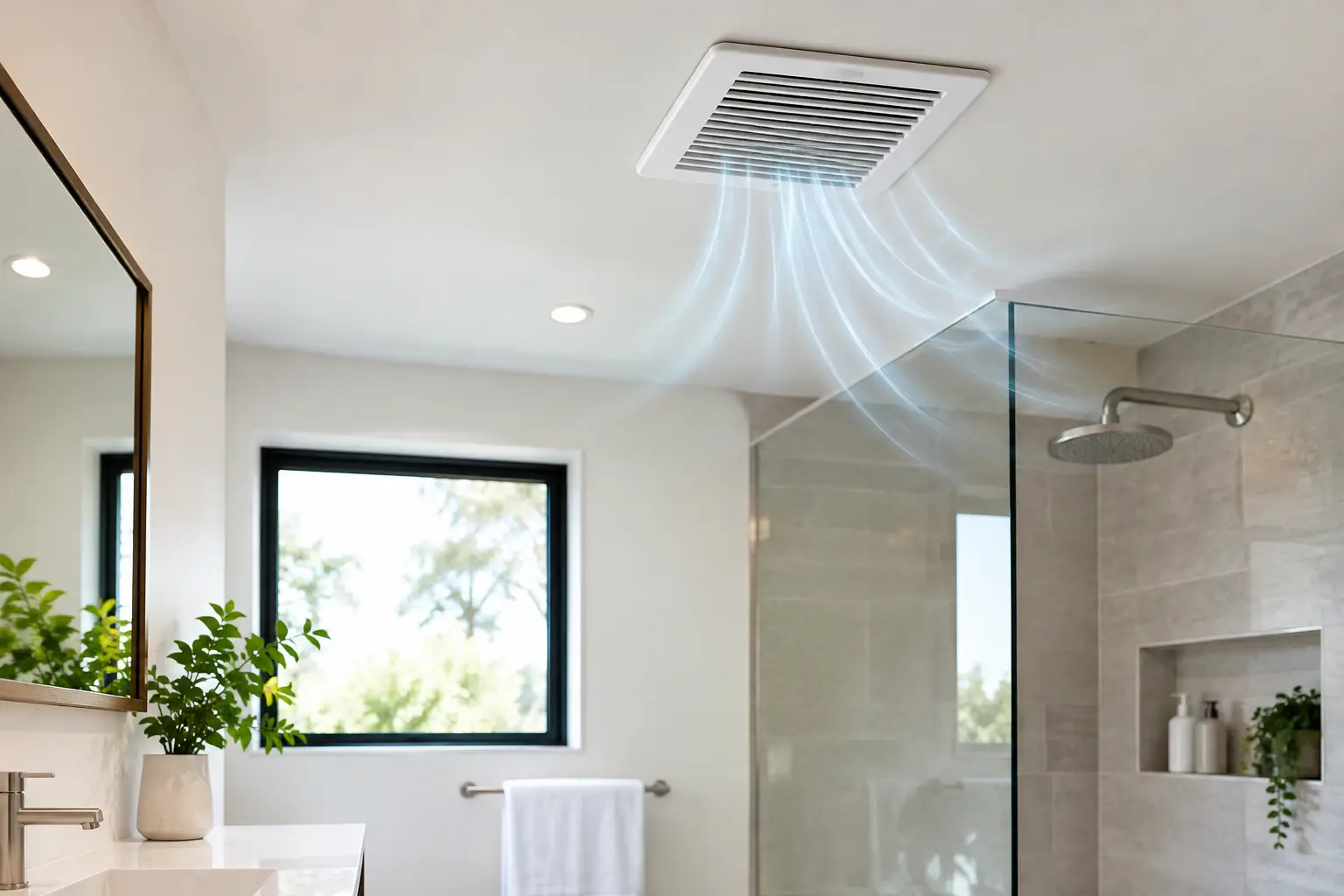
A beautiful new shower, precise tilework, and fresh paint can all lose their appeal when the mirror stays fogged for an hour and moisture collects on the ceiling. The best bathroom ventilation upgrades do more than clear steam. They protect drywall, grout, cabinetry, paint, and framing from the repeated moisture exposure that causes peeling finishes, mildew, and costly repairs.
For homeowners in Macomb County and Metro Detroit, ventilation deserves attention early in a bathroom remodel, not as an afterthought once the room is finished. The right fan, controls, and duct path need to work together. A powerful fan connected to poor ductwork will not perform like it should, while a well-planned system can make a compact hall bath or a large primary bathroom feel drier, cleaner, and more comfortable every day.
Start With the Actual Moisture Problem
Not every bathroom needs the same solution. A powder room with a sink and toilet has very different ventilation needs than a primary bath with a large shower, soaking tub, enclosed water closet, and two people getting ready every morning.
Look for the signs that the existing setup is falling short. Persistent mirror fog, damp towels that never seem to dry, mildew at caulk lines, stained ceiling paint, musty odors, and peeling drywall are all clues that humid air is lingering too long. A fan that rattles, runs loudly, or barely pulls tissue toward its grille may also be undersized, dirty, poorly ducted, or nearing the end of its service life.
During a remodel, it is worth considering how the room will actually be used. A shower with a glass enclosure holds steam differently than an open shower. A bathroom used by several family members in the morning needs recovery time between showers. The goal is not simply to install a fan. It is to remove moisture reliably for the way your household lives.
Upgrade to a Properly Sized Exhaust Fan
The first and most valuable improvement is usually a correctly sized exhaust fan. Fan capacity is measured in CFM, or cubic feet per minute. Higher CFM can move more air, but bigger is not automatically better. The room size, ceiling height, fixture layout, and duct run all affect what will work well.
A common starting point is to provide roughly one CFM per square foot of bathroom floor area. Larger bathrooms, high ceilings, separate toilet rooms, steam-heavy showers, and oversized tubs may need additional capacity. Local code requirements also matter, so the final selection should be confirmed for the project and municipality.
An undersized fan leaves moisture behind. An oversized fan may create unnecessary noise, cost more, and still disappoint if the duct route restricts airflow. Selecting the fan and planning the ductwork as one system is the better approach.
Choose Quiet Performance, Not Just More Power
Many homeowners stop using their exhaust fan because it is loud enough to interrupt a conversation. Fan sound is rated in sones. Lower sone ratings mean quieter operation, and a quiet fan is far more likely to be used consistently.
For a primary bathroom or a bathroom near bedrooms, a low-sone fan can make a noticeable difference in everyday comfort. Quiet equipment also feels more appropriate in a finished, spa-inspired space where every other detail has been carefully considered. There is a trade-off: quieter, higher-quality units generally cost more than basic builder-grade fans. For a room that sees daily showers, that investment is often worthwhile.
Add Humidity-Sensing or Timed Controls
A strong fan only helps when it runs long enough. This is where automatic controls can be one of the smartest bathroom ventilation upgrades.
A humidity-sensing switch turns the fan on when moisture levels rise and continues running until the room dries out. It is especially helpful in kids’ bathrooms, guest bathrooms, and busy households where people may forget to use the switch. Many controls can be adjusted so the fan does not run unnecessarily because of normal changes in humidity elsewhere in the home.
A timer is another practical option. Rather than asking someone to remember to return and shut the fan off, a timed control can run it for a selected period after a shower. Timers are simple, effective, and often a good fit when a homeowner prefers predictable manual control.
Some systems combine a motion sensor, humidity sensor, and timer. Those features can be convenient, but more automation is not always necessary. The right choice depends on who uses the bathroom and whether the goal is hands-free operation or straightforward control.
Treat Ductwork as Part of the Upgrade
The fan is visible, but the ductwork determines whether it can move air efficiently. Moist bathroom air should be discharged outdoors, not into an attic, crawlspace, garage, or other enclosed area. Sending humid air into those spaces can contribute to condensation, mold, and damage that may not be visible until the problem has grown.
The most effective duct route is generally short, direct, and properly supported, with as few sharp turns as possible. Smooth, rigid metal duct is typically a stronger choice than flexible duct for airflow. Flexible duct may be useful in limited situations, but it can sag or develop bends that reduce performance if it is not installed carefully.
In Michigan, insulated ductwork can be particularly valuable when the run passes through a cold attic. Insulation helps reduce condensation forming on the outside of the duct. An exterior termination cap with a backdraft damper also matters. It helps keep cold air, pests, and outside air from traveling back into the bathroom when the fan is off.
This is one reason ventilation work should be coordinated before ceilings are closed. A clean-looking grille does not reveal whether the hidden installation is routed correctly. Careful planning behind the walls and above the ceiling protects the finished work homeowners see every day.
Improve Airflow Into the Bathroom
Exhaust fans cannot remove air effectively unless replacement air can enter the room. A tightly closed bathroom door with no undercut or transfer path can limit the system’s performance. In some bathrooms, a small gap beneath the door is enough to help air move toward the fan. In others, the layout may call for a different solution.
This detail can be overlooked during a remodel, especially when new flooring changes the door clearance. It is a small consideration, but it affects how well the entire ventilation system works. Good remodeling is often about these connected details: the fan, duct, switch, door, trim, tile, and ceiling all need to come together without compromising performance or finish quality.
Consider a Dedicated Fan for Large or Divided Bathrooms
A large primary bathroom may not be well served by one fan placed far from the shower. If the toilet is enclosed in a separate water closet, that area may benefit from its own exhaust fan. A long room with a shower at one end and a fan at the other may also need a more thoughtful design.
Placement matters because moisture should be captured near its source. That does not necessarily mean placing a fan directly inside a shower area, since fixture ratings and electrical requirements must be considered. It does mean looking at the room plan before rough-in work begins and deciding where the fan can remove steam most effectively.
For substantial additions or remodeled bathrooms, a contractor may recommend multiple fans, a higher-capacity unit, or a continuous low-speed ventilation strategy. Each option has different installation costs and operating benefits. The best answer depends on the room, the home’s construction, and the available duct path to the exterior.
Pair Ventilation With Moisture-Resistant Finishes
Even excellent ventilation does not eliminate the need for correct materials and installation. Cement board or other approved backer materials in wet areas, properly waterproofed shower assemblies, quality grout and caulk, and well-prepared drywall all contribute to a bathroom that holds up over time.
Ventilation reduces the moisture load on these materials. It cannot correct an improperly waterproofed shower, and waterproofing cannot replace proper ventilation. When both are handled correctly, homeowners get a more durable bathroom with less ongoing maintenance.
A bathroom remodel is the ideal time to address both sides of the equation. Renovation Innovations plans functional details alongside finish selections, so ventilation, tile layout, lighting, and drywall repairs are considered as part of a complete space rather than treated as disconnected tasks.
When Replacement Makes More Sense Than Repair
If an existing fan is noisy but otherwise functional, cleaning the grille and housing may improve performance. Dust buildup can restrict airflow over time. However, a fan with a weak motor, worn bearings, poor capacity, or ductwork that terminates in the wrong location is usually better addressed with a true upgrade.
Replacing a fan during a full remodel is generally simpler because ceiling access, electrical work, and duct routing can be planned before finishes are installed. In an otherwise finished bathroom, replacement may still be possible, but access limitations can affect the scope of work. A professional assessment can identify whether the problem is the fan itself, the duct run, the exterior cap, or a combination of all three.
A dry, comfortable bathroom is not a luxury detail. It is part of protecting the renovation you have invested in. When planning your next update, give the hidden ventilation system the same careful attention as the tile and fixtures, and the room will look better and perform better for years to come.
