









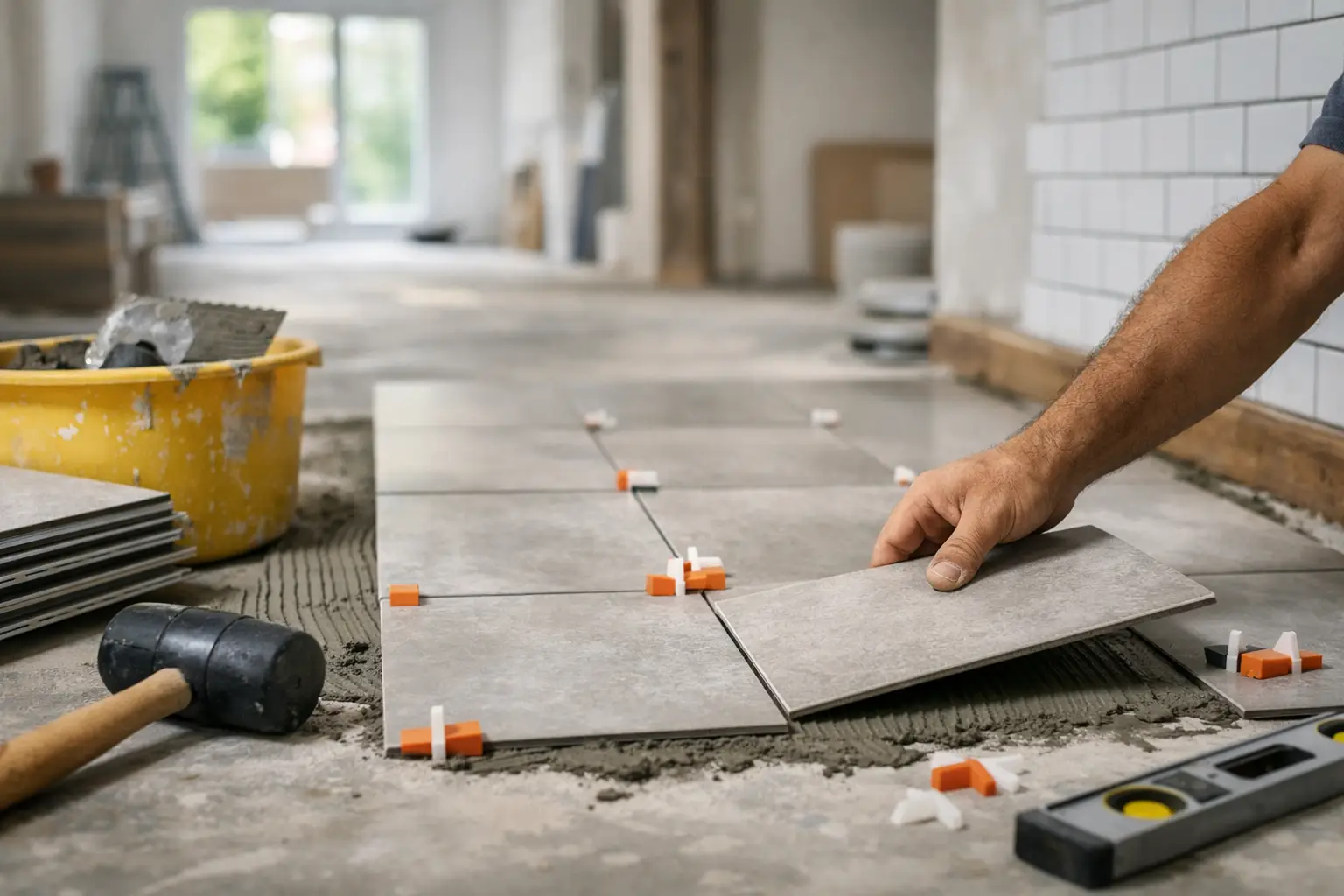
A tile budget can change quickly once an old bathroom floor comes up or a kitchen wall is opened. The tile itself may be the visible star, but the surface behind it determines whether the finished work stays straight, sealed, and durable. This guide to tile installation costs helps Macomb County and Metro Detroit homeowners understand what they are paying for, where estimates can vary, and how to plan a project without cutting corners that matter.
What Does Tile Installation Usually Cost?
Tile installation costs depend on the scope of the work, the tile selected, the condition of the existing surface, and the detail level of the design. A small, straightforward repair may cost a few hundred dollars, while a full bathroom floor, shower surround, or custom kitchen backsplash can range into several thousand dollars. A complete tiled shower or bathroom renovation can be substantially more because tile work is only one part of the project.
For a basic installation on a sound, prepared surface, labor is commonly priced by the square foot. In Southeast Michigan, homeowners may see installation labor starting in the mid-single digits per square foot for simple ceramic floor tile and increasing significantly for detailed layouts, large-format porcelain, natural stone, shower walls, or mosaics. The total project price should also account for preparation, materials beyond the tile, removal, trim, and any needed repairs.
Square-foot pricing is useful for early planning, but it is not the whole story. A 40-square-foot backsplash with outlets, cabinet edges, a window, and a patterned tile can require more precision and labor than a larger open floor. A reliable estimate looks at the actual space rather than treating every square foot the same.
The Main Factors That Shape Tile Installation Costs
Tile material and size
Ceramic tile is often a budget-friendly, durable option for walls and floors. Porcelain generally costs more to purchase and can be harder to cut, but its density and water resistance make it an excellent choice for bathrooms, entryways, and busy kitchens. Natural stone, glass, handmade tile, and specialty mosaic sheets can raise both material and installation costs.
Tile size matters just as much as material. Large-format tile creates a clean, modern look with fewer grout lines, but it requires a very flat substrate and careful handling. If the floor or wall is uneven, extra preparation is needed to prevent lippage, where one tile edge sits higher than the next. Small mosaics involve more grout joints and more cuts around corners, drains, and fixtures.
A lower tile price does not always mean a lower finished cost. For example, inexpensive irregular handmade tile can take more time to sort, space, cut, and install correctly than a premium but consistent porcelain tile.
Surface preparation and repairs
Preparation is where a professional tile installation earns its value. Tile should not be installed over a weak, damaged, or improperly prepared surface simply because it saves time at the beginning. Doing so can lead to cracked grout, loose tile, water damage, or a floor that feels uneven underfoot.
The contractor may need to remove old tile and adhesive, repair subfloor damage, flatten a floor, install cement board or an uncoupling membrane, or correct drywall before setting tile. In wet areas, waterproofing is essential. A shower requires a properly built pan, waterproof wall system, sealed penetrations, and careful transitions around niches, benches, and fixtures.
These conditions are difficult to price accurately from a photo alone. A detailed onsite evaluation helps identify likely concerns before work starts. Occasionally, hidden damage is only visible after demolition. A good contractor explains how those discoveries will be documented, priced, and resolved rather than covering them up.
Demolition and disposal
Removing existing tile is labor-intensive, dusty work. Costs rise when tile is bonded tightly to concrete, installed over multiple old layers, or located in a tight bathroom where materials must be carried carefully through the home. Disposal fees, dust containment, and protection for adjacent floors and furnishings also belong in the budget.
Homeowners sometimes ask whether new tile can go directly over old tile. It can be possible in limited situations, but only if the existing installation is secure, flat, and appropriate for the added height. The decision must also account for doors, appliances, plumbing fixtures, transitions, and waterproofing. Removal is often the more dependable path when the existing surface has cracks, loose areas, or unknown conditions underneath.
Layout, pattern, and finishing details
A straight-lay pattern on an open floor is generally the most efficient layout. Diagonal patterns, herringbone, basketweave, borders, decorative insets, and mixed-size designs require additional measuring and cutting. The same is true for a backsplash that runs to the ceiling, wraps around a window, or uses a focal-point pattern behind the range.
Finishing details make a major difference in the final appearance. Bullnose, metal edge trim, stone thresholds, grout color, caulked changes of plane, and clean cuts around outlets are not minor afterthoughts. They are the details homeowners see every day. They should be discussed during design planning so the estimate reflects the finish level you expect.
Wet-area complexity
Bathrooms are usually more involved than dry-area tile projects because water management is non-negotiable. A tiled shower can include demolition, framing corrections, plumbing coordination, a shower pan, waterproofing, wallboard, niches, benches, tile setting, grouting, sealing where appropriate, and fixture installation.
A curbless shower, linear drain, oversized niche, or large-format wall tile can create a striking result, but each feature adds planning and labor. This does not make those choices poor investments. It means the project should be designed as a complete system, not priced as a simple square-foot tile job.
What a Clear Tile Estimate Should Include
When comparing bids, compare the scope of work line by line. The lowest number can be misleading if it leaves out preparation, waterproofing, demolition, or finish materials that will be required later.
A clear estimate should identify the tile areas being installed, who supplies the tile and setting materials, the expected preparation work, removal and disposal, grout and trim, and whether sealing is included for the selected material. For shower projects, it should address the waterproofing approach and the work around drains, niches, benches, or curbs. It should also explain how changes or hidden conditions will be handled.
Ask whether the quote includes layout planning. Tile placement affects the way a room feels. Centering a pattern, avoiding narrow slivers at visible walls, and aligning grout lines with a vanity, window, or countertop are decisions best made before installation begins.
How to Budget Without Sacrificing the Work Behind the Tile
If you need to control costs, simplify the design before reducing necessary preparation. Choose a standard straight layout, limit specialty accent areas, select a readily available porcelain or ceramic tile, and keep the tile field within practical boundaries. A well-installed, simple tile can look refined for years.
Avoid saving money by skipping waterproofing, using unsuitable wall materials, or choosing an installer solely on the lowest price. Repairs after a failed shower or cracked floor are far more disruptive than doing the foundation work correctly the first time.
It is also smart to reserve a contingency for renovation work, especially in older homes. The amount depends on the project, but homeowners should expect the possibility of subfloor repairs, framing adjustments, plumbing updates, or wall repairs once the old finishes are removed.
Getting a More Accurate Tile Installation Quote
Bring measurements, photos, inspiration images, and the exact tile selection if you have it. If you have not selected tile yet, share the look you want and the way the room will be used. A contractor can help you weigh options that fit your budget, maintenance preferences, and desired finish.
During the consultation, be specific about what is staying and what is changing. Replacing a vanity, moving plumbing, adding a niche, extending a backsplash, or changing the flooring transition can affect the sequence and price of the work. Clear decisions early reduce avoidable changes later.
Renovation Innovations provides free initial consultations and estimates for homeowners who want a practical plan for tile repair, a backsplash, or a more complete bathroom or kitchen renovation. The goal is not simply to install tile, but to build a finished surface that looks intentional and performs the way it should.
The best tile project starts with a budget that respects both the finish you can see and the preparation you cannot. Choose materials you enjoy, ask direct questions about the work behind them, and give craftsmanship the room it needs to last.
