









A shower can look beautiful on installation day and still become a source of frustration if the tile, grout, layout, and waterproofing were not considered together. The right choice is not simply the tile you like most in a showroom. It is the material and design that will suit your household, fit the shower’s proportions, clean up reasonably well, and perform reliably through years of daily use.
When homeowners ask how to choose shower tile, we recommend starting with function before narrowing down color and pattern. A thoughtful plan helps prevent common regrets, such as a slick floor, excessive grout lines, or a tile scale that makes a compact shower feel crowded.
Start With the Shower Floor
The shower floor has different demands than the walls. It needs dependable traction, proper drainage, and a layout that works with the slope toward the drain. For that reason, smaller tiles are often a practical choice for shower floors. Their additional grout joints provide more grip underfoot and allow the installer to follow the floor’s pitch more naturally.
Mosaic tile is a popular option because it is available in porcelain, ceramic, natural stone, and many finishes. A matte or textured surface generally offers better footing than a highly polished tile. This matters even more for households with young children, older adults, or anyone who prefers extra confidence in a wet shower.
Large-format tile can sometimes work on a shower floor, but it depends on the drain location, floor design, and tile size. A linear drain may allow for larger pieces because the floor can slope in one direction. With a center drain, a smaller mosaic is usually the more forgiving and functional choice.
Choose Wall Tile Based on Maintenance and Style
Shower walls give you more flexibility. Large-format porcelain has become a favorite for modern bathrooms because it creates a clean, continuous appearance with fewer grout lines to maintain. It can make a small shower feel larger and gives the room a polished, custom look.
Ceramic tile is another dependable wall option. It comes in a wide range of colors, shapes, and price points, making it useful for projects with a defined budget. The key is selecting tile rated for wet-wall use and working with an installer who can create clean, consistent lines around corners, niches, plumbing fixtures, and transitions.
Natural stone delivers warmth and character that manufactured tile cannot duplicate exactly. However, it usually requires more maintenance, including appropriate sealing and products that will not damage the surface. Stone can be an excellent choice for a homeowner who appreciates natural variation and is comfortable with the care it requires. It may not be the best fit for a busy family bathroom where low maintenance is the priority.
Porcelain is often the strongest all-around option for shower walls and floors. It is dense, moisture-resistant, durable, and available in finishes that resemble stone, concrete, marble, or wood. A convincing marble-look porcelain can provide an elevated look without the maintenance concerns associated with many natural marbles.
Consider Tile Size in Relation to the Room
Tile size changes the visual balance of a shower. Large tiles can reduce visual clutter and make a compact bathroom feel more open. They also mean fewer grout joints. But a large tile must be planned carefully around shower dimensions. Awkward narrow cuts at the ceiling, corners, or fixture wall can take away from an otherwise beautiful selection.
Smaller subway tile, hexagon tile, or mosaics can bring texture and personality, especially in a shower niche or accent wall. The trade-off is more grout. More grout means more lines to clean and more opportunity for discoloration over time if it is not maintained.
Before committing to a tile, think about the full layout rather than one individual sample. A skilled contractor can map the tile around the shower walls, niche, bench, curb, and ceiling to avoid distracting slivers and place focal points intentionally. This planning is where a good design becomes a finished shower that looks balanced from every angle.
Use Accent Tile With Purpose
An accent can give a shower a custom feel without overwhelming the space. A vertical strip behind the fixtures, a patterned niche back, or a feature wall can add contrast while allowing the main field tile to remain timeless.
It is usually better to choose one clear focal point than several competing ones. For example, bold patterned floor tile may pair well with calm wall tile and a simple niche. If the walls, floor, and niche all use busy patterns, the shower can feel smaller and visually unsettled.
Do Not Treat Grout as an Afterthought
Grout color and joint size affect the finished appearance almost as much as the tile itself. A grout color close to the tile creates a quieter, more continuous surface. Contrasting grout highlights each tile and can emphasize a traditional subway layout, geometric pattern, or handmade look.
For shower floors, grout should be selected for more than appearance. A medium or darker shade may be more forgiving than bright white in a high-use shower. On the walls, a light grout can look crisp, but it should suit the household’s willingness to maintain it.
Many homeowners also benefit from choosing a high-performance grout appropriate for wet areas. The right product can offer better stain resistance and easier cleaning than basic grout options. Caulk, not grout, should be used at changes of plane, such as wall corners and the joint where the wall meets the shower floor. These areas need flexibility to handle normal movement.
Match the Finish to Your Cleaning Routine
A glossy tile reflects light and can make a darker shower feel brighter. It also shows water spots, soap residue, and fingerprints more readily, particularly in darker colors. Matte tile has a softer appearance and may hide water spotting better, though some heavily textured finishes can hold onto soap film if they are not cleaned regularly.
There is no single best finish for every bathroom. If you want a dark, dramatic shower, a satin or matte porcelain may be easier to live with than a dark polished surface. If your goal is a bright, airy shower, a glossy wall tile can work beautifully with a practical matte mosaic floor.
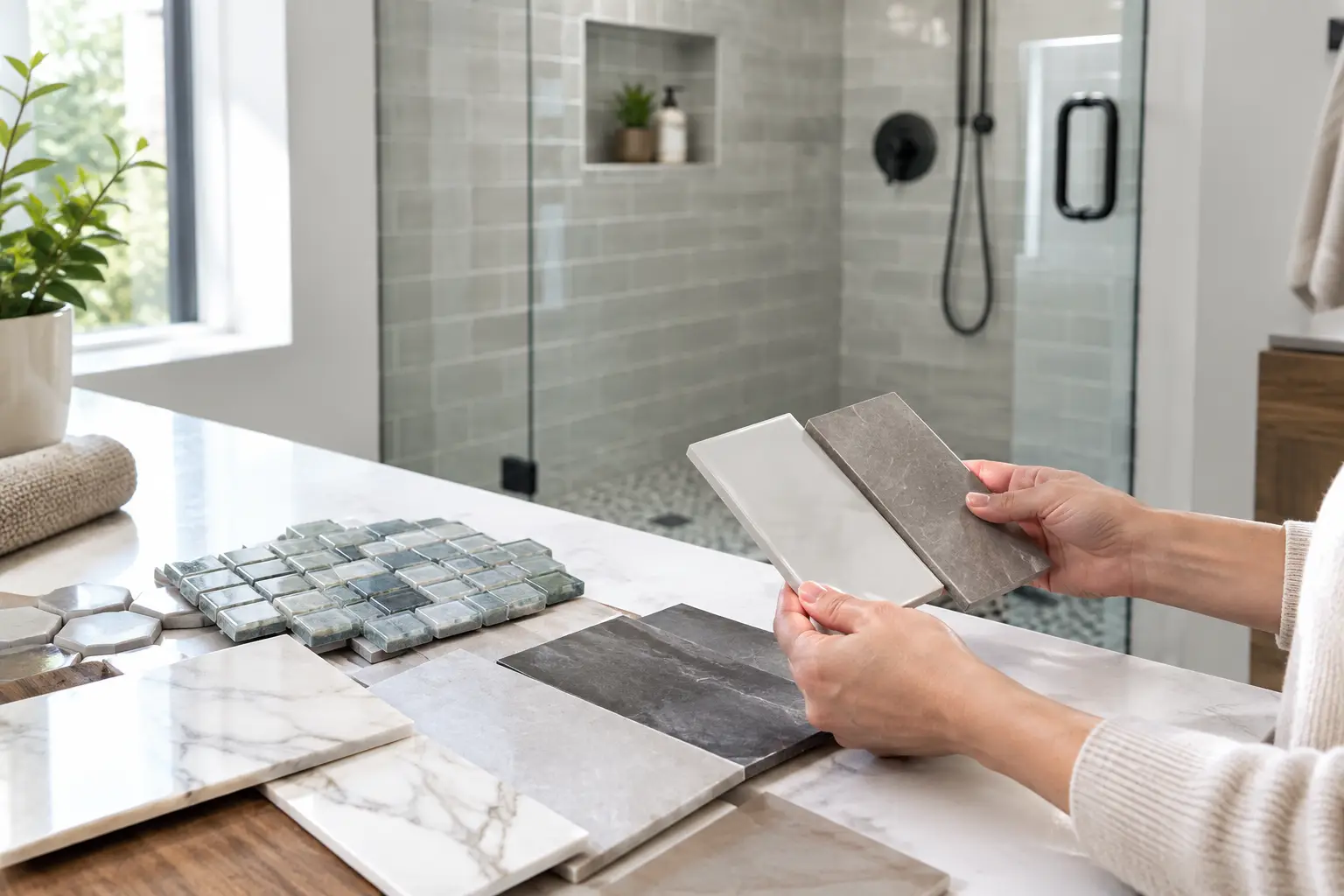
Bring samples into the actual bathroom when possible. Look at them in daylight and with the room’s planned lighting. Tile can appear warmer, cooler, lighter, or darker once it is surrounded by paint, vanity finishes, and fixtures.
Build the Design Around the Details
Tile selection should work with the pieces around it: the vanity, countertop, hardware, shower glass, drain finish, and fixtures. Warm beige or cream tile usually pairs best with warm metals and wood tones, while cool gray or crisp white tile may support a more contemporary chrome or black fixture palette. These are guidelines, not rules, but coordinating undertones makes the room feel intentional.
Also consider where the tile will start and stop. Full-height shower tile often provides the most finished appearance and protects the surrounding walls from moisture. In a bathroom addition or full remodel, extending a feature tile beyond the shower can create a stronger connection between the shower and the rest of the room.
A niche should be sized around the tile whenever possible. Planning its dimensions before installation can avoid tiny cuts or an off-center appearance. The same principle applies to benches, windows, curbs, and decorative borders.
Waterproofing Matters More Than the Surface Tile
Tile and grout are not the waterproof layer of a shower. The system behind them is what protects the framing and surrounding rooms from moisture damage. Proper shower construction includes a correctly sloped base, a compatible waterproofing system, carefully sealed corners and penetrations, and attention to every transition.
This is why choosing a qualified installer matters as much as choosing the tile itself. A beautiful tile job can fail early if the preparation is rushed. At Renovation Innovations, shower tile planning includes the practical details behind the finished surface, so homeowners can rest easy knowing the work is designed for daily use, not just a good first impression.
Set a Budget That Includes Installation Complexity
Tile prices vary widely, but material cost is only part of the project. Large-format tile, detailed mosaics, herringbone patterns, miters, custom niches, and specialty edges can require more labor and more careful layout. Natural stone may also add sealing and maintenance considerations.
That does not mean a beautiful shower requires the most expensive tile in the showroom. A well-chosen porcelain field tile with a focused accent, quality grout, and precise installation can look more polished than an expensive material installed without attention to detail. Ask for an estimate that accounts for tile preparation, waterproofing, layout, trim pieces, and any repairs uncovered during demolition.
The best shower tile is the one that suits how you live, supports the look you want, and is installed as part of a complete system. Choose samples you will still enjoy after the trends shift, then give the layout and waterproofing the same attention you give the color. That is how a new shower becomes a lasting part of your home rather than another item on the repair list.
