









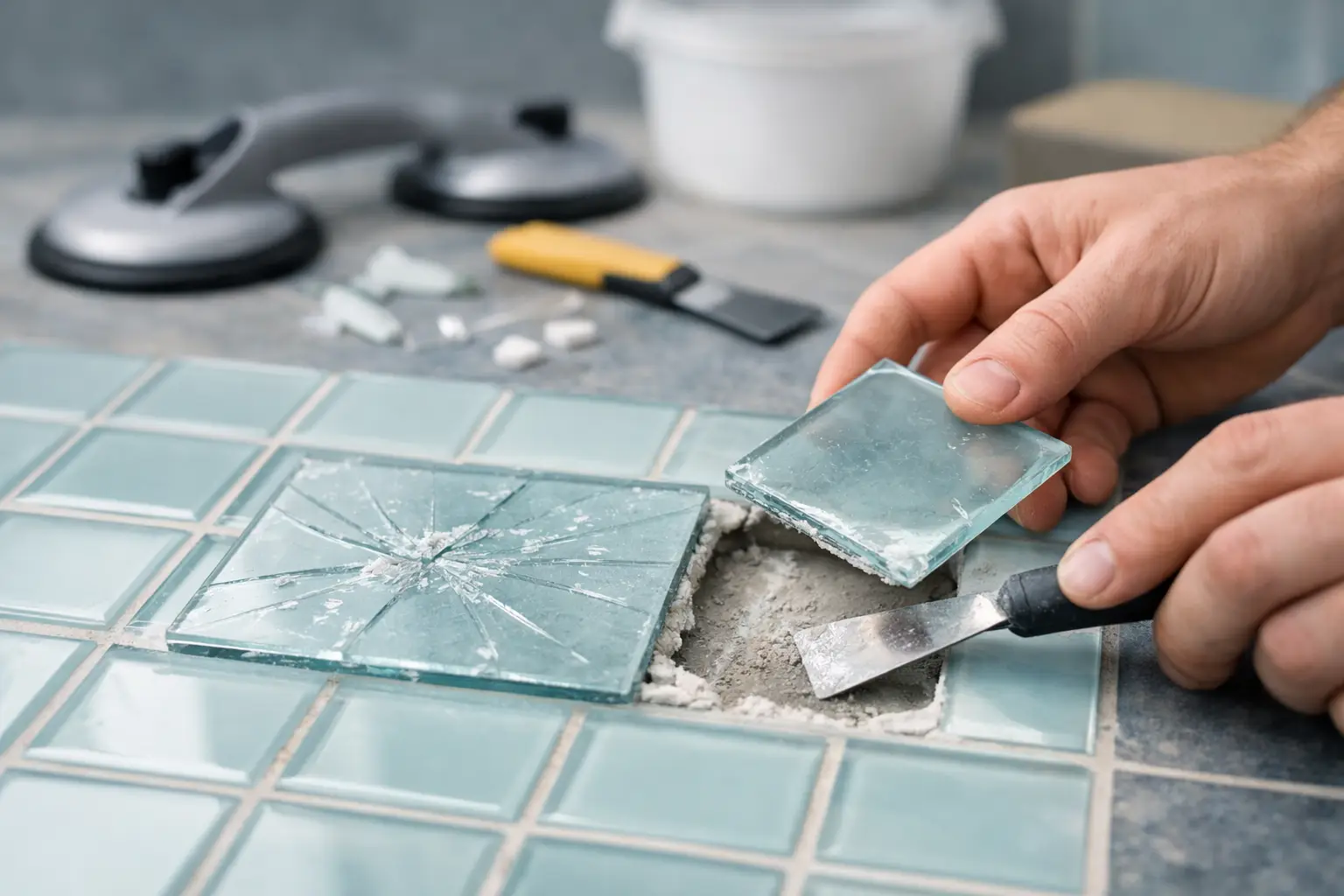
A single cracked glass tile can pull attention away from an otherwise beautiful backsplash or shower wall. The good news is that you can often replace cracked glass tile without removing the entire installation. The difficult part is protecting the surrounding pieces, finding a convincing match, and correcting whatever caused the crack in the first place.
Glass tile is less forgiving than ceramic or porcelain. It can chip at the edges, show mortar through its face, and fracture when pressure is applied unevenly. A careful repair restores the finished look while preserving the waterproofing and craftsmanship behind the tile.
First, Find Out Why the Glass Tile Cracked
Before removing the damaged piece, look closely at the crack and the tiles around it. A small impact crack is common near a countertop, stove, or busy shower wall. A dropped pan, a hard object striking the surface, or even an overly tight outlet cover can damage one tile without affecting the installation.
A crack that runs through grout joints, appears in multiple tiles, or keeps returning deserves a closer investigation. The issue may be movement in the wall, a loose substrate, inadequate expansion space, or a tile that was installed with poor mortar coverage. In a shower, moisture damage behind the wall can also compromise the bond and create movement.
This distinction matters. Replacing one damaged tile is a sensible repair when the surrounding installation is solid. If several tiles sound hollow, grout is separating, or the wall feels soft, swapping a single piece may only hide a larger problem temporarily.
Can You Replace One Cracked Glass Tile?
In many cases, yes. A professional can remove one glass tile, clean the opening, set a replacement, and grout the joints to blend with the existing surface. The repair is most straightforward when the tile is mounted on a stable backsplash wall and the original material is still available.
The main variable is the replacement tile. Glass changes appearance with lighting, grout color, backing paint, and the mortar behind it. Even tiles from the same product line can vary slightly by production run. For iridescent, translucent, recycled, or textured glass, a close match may still look different once installed.
If you have leftover tile from the original project, save it for this kind of repair. One or two extra pieces can prevent a much wider replacement later. If no extras remain, a contractor can identify the manufacturer or source a compatible tile, but an exact match is not always possible with older or discontinued styles.
How Professionals Replace Cracked Glass Tile
The work is precise because the goal is not simply to get the broken tile out. The goal is to keep neighboring tiles, grout lines, drywall, cement board, and any waterproofing intact.
Protecting the Surrounding Tile
The repair begins by masking adjacent tile and covering the nearby countertop, tub, or floor. The grout surrounding the cracked tile is carefully removed first. This creates separation between the damaged piece and its neighbors so vibration and pressure are less likely to transfer across the installation.
For glass tile, a technician typically breaks and removes the tile from the center outward rather than prying from an edge. Prying can crack nearby pieces or pull out sections of the wall surface behind the tile. Eye protection and careful debris control are essential because glass fragments can be sharp and unpredictable.
Cleaning the Tile Opening
Once the broken tile is out, the old mortar must be removed without gouging the backing surface. This is where many do-it-yourself repairs go wrong. If too much material is scraped away, the replacement tile can sit lower than the surrounding field. If old mortar remains too high, the new tile may protrude or refuse to sit flat.
The substrate should also be checked for cracks, moisture damage, loose material, or movement. On a kitchen backsplash, this may be drywall. In a shower, the backing and waterproofing details are more critical. Any damaged surface should be corrected before a new tile is installed.
Setting the New Glass Tile Correctly
Glass tile needs an adhesive selected for glass, not just whichever mortar happens to be on hand. Many clear or translucent tiles require a bright white setting material so the color stays true. Gray mortar can darken the tile, while poor coverage can leave visible shadows or voids behind the glass.
The replacement is set flush with the surrounding surface and aligned with existing grout joints. Proper mortar coverage matters because voids can create weak spots and make the tile more vulnerable to future cracking. After the material cures, the joints are grouted to match the original color and texture as closely as possible.
A quality repair should look level, clean, and intentional. Depending on the tile style and age, the repaired piece may not disappear completely, but it should not look like an afterthought.
When a DIY Repair Makes Sense – and When It Does Not
A handy homeowner may be able to replace a simple, opaque glass mosaic on a dry backsplash, especially when spare material is available. The project still requires patience, protective equipment, grout removal tools, the correct glass-tile mortar, and a light touch. Rushing removal is the fastest way to turn one broken tile into several.
Professional help is usually the better choice for a large-format glass tile, a shower wall, a patterned installation, or any tile with a transparent or reflective finish. Those projects leave little room for adhesive stains, uneven lippage, damaged waterproofing, or mismatched grout lines.
Call a tile professional before attempting the repair if you notice any of the following:
- More than one cracked, loose, or hollow-sounding tile
- Cracks continuing through grout joints or across a wall
- Soft drywall, staining, mildew, or moisture near the damaged area
- A missing replacement tile or a discontinued glass product
- A shower, tub surround, or other wet-area installation
These conditions can point to an underlying installation issue rather than ordinary impact damage.
Matching Replacement Glass Tile Matters More Than Most Homeowners Expect
Finding a tile with the same size is only the starting point. Glass tile varies by thickness, edge finish, transparency, color, sheen, and mounting method. A 3-by-6-inch subway tile can look noticeably wrong beside the original if its edge is sharper, its face is glossier, or its backing reflects light differently.
Take clear photographs in natural daylight and under the room’s regular lighting before shopping for a replacement. Bring a loose sample if you have one. Measurements should include the actual face size and thickness, not only the nominal tile size listed on a box.
Grout presents a similar challenge. White grout may yellow with age, while darker grout can lighten from cleaning. Sometimes a careful grout color match blends the repair well. Other times, refreshing grout across a small backsplash section produces a more consistent result. The right approach depends on how visible the repaired location is and how much the existing grout has changed over time.
Preventing Another Cracked Tile
Once the repair is complete, avoid striking glass tile with hard cookware, metal tools, or heavy accessories. On backsplashes, do not lean large cutting boards or appliance parts directly against the tile. In bathrooms, avoid overtightening hooks, shelving hardware, outlet covers, and trim plates that can create concentrated pressure near tile edges.
Just as important, keep grout and caulk in good condition. Grout joints protect the edges of the tile, while flexible caulk at changes of plane allows small amounts of movement where walls meet counters, tubs, or other surfaces. Cracked or missing caulk should be addressed before moisture reaches the wall behind the tile.
For homeowners in Macomb County and Metro Detroit, Renovation Innovations handles detailed tile repairs as well as complete kitchen and bathroom renovations. A focused evaluation can determine whether one tile needs replacement or whether the wall needs a more lasting correction.
A cracked glass tile does not have to become a full remodel, but it should be treated with the same care as the rest of the installation. The right replacement, a stable surface, and meticulous setting work give the wall its finished appearance back and help it stay that way.
