









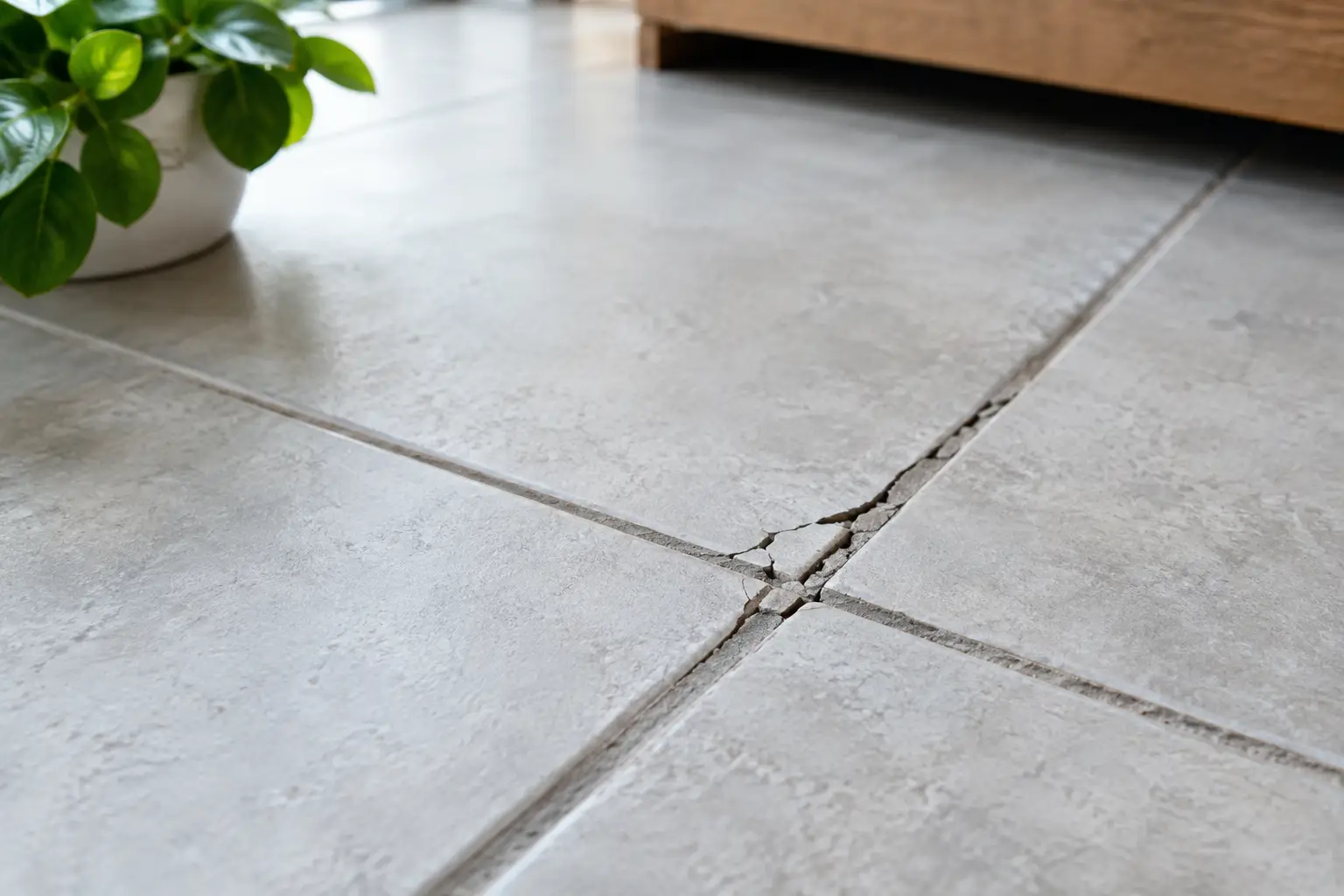
A hairline crack running through a shower floor joint or kitchen backsplash can look minor, but it is often the first visible sign that something underneath the tile has changed. Homeowners understandably ask why grout cracks after a new installation or years into using a bathroom or kitchen. The answer is not always poor grout. Grout is a hard, cement-based material, and it is usually the part of the assembly that reveals movement, moisture, or installation issues first.
Some cracked grout is a straightforward repair. Other cracking points to loose tile, failed backing materials, water intrusion, or normal structural movement that needs to be addressed before new grout is installed. Knowing the difference can save you from repeating the same repair every few months.
Why Grout Cracks: The Most Common Causes
Grout fills the spaces between tiles, but it is not designed to act like an adhesive or a flexible expansion joint. When the tile assembly moves, grout often cannot move with it. The pattern, location, and timing of a crack help determine what is happening.
Normal house movement
Homes settle and shift with changing temperatures, humidity, seasonal conditions, and everyday use. This is especially common in Metro Detroit homes, where the structure experiences substantial temperature swings throughout the year. A small crack along a long tile wall, at a corner, or where a tile surface meets a countertop may be related to movement rather than a problem with the tile itself.
Changes of plane need flexible sealant, not standard grout. For example, the inside corners of a tiled shower, the joint between a backsplash and countertop, and the perimeter where floor tile meets a wall should generally be finished with a color-matched silicone or another suitable flexible sealant. If rigid grout is used there, cracking is likely over time.
Movement in the subfloor or wall framing
Floor tile needs a stable, properly prepared base. If a wood subfloor flexes when someone walks across it, the tile and grout above it are under stress. The grout may crack first, particularly along the same joint lines or in a concentrated area near a doorway, toilet, vanity, or heavily traveled path.
Wall movement can create similar concerns. In a bathroom, framing that has shifted, a poorly supported wall, or an improperly prepared shower surround can cause grout joints to separate. Regrouting without correcting the movement may improve the appearance briefly, but the cracks will return.
Improper installation or surface preparation
Quality tile work starts before the first tile is set. The substrate must be clean, flat, stable, and appropriate for the space. A shower requires waterproofing behind or beneath the tile surface. A floor may need a proper underlayment or uncoupling layer. Backsplashes need a sound wall surface that will not flex or deteriorate.
Problems can occur when tile is installed over damaged drywall, uneven surfaces, unsupported cement board, or a floor that does not meet deflection requirements. In some cases, tile adhesive coverage is insufficient, leaving voids beneath the tile. Those unsupported areas can allow tile to move when weight is applied, cracking the grout around it.
Grout mixed or installed incorrectly
Not every crack indicates a major underlying issue. Traditional cement grout can crack or crumble if it was mixed with too much water, packed too lightly into the joints, allowed to dry too quickly, or cleaned aggressively before it cured. Old grout can also wear down naturally, particularly on shower floors and kitchen backsplashes that receive frequent cleaning.
This type of issue is often limited to shallow cracking, pinholes, or crumbling at the surface. If the tile is firmly bonded and the cracks do not follow a recurring pattern, removing loose grout and installing new grout may be an appropriate repair.
Moisture getting behind the tile
Water is one of the biggest concerns in a shower or tub surround. Grout is not waterproof, even when sealed. Its role is to fill joints and provide a finished appearance while the waterproofing system behind the tile handles moisture management.
If grout cracks repeatedly in a shower, especially with loose tiles, staining, a musty odor, soft drywall nearby, or discoloration on a ceiling below, the issue may extend beyond the surface. Water can damage backer materials, framing, and subfloors over time. At that point, adding new grout alone can trap the problem behind a better-looking surface.
How to Tell Whether Cracked Grout Is a Small Repair
Start by looking closely at the crack and gently checking the surrounding tile. A narrow crack in one isolated grout line, with solid tile around it, is often a repairable maintenance issue. This is common where a backsplash meets a countertop or where a small section of older grout has worn away.
A larger concern is more likely when grout cracks keep returning in the same place, several adjacent joints crack at once, or tiles sound hollow, rock under pressure, or have visible movement. Cracked tile, missing grout, and loose tile together usually mean the installation needs more than a cosmetic touch-up.
Location matters as well. Grout cracks on a dry kitchen backsplash are different from cracks on a shower floor. A shower floor gets constant water exposure and carries body weight, so recurring cracks deserve prompt attention. In a bathroom, also look for failed caulk at corners, around fixtures, or at the tub line. These details work together to keep water out of the wall system.
Why Regrouting Alone Can Sometimes Make Things Worse
It is tempting to spread new grout over a crack and move on. That approach may work for a shallow, isolated defect, but it will not hold if the old grout is loose or the tile is moving. New grout needs clean, stable joint space to bond properly.
For a lasting repair, loose grout should be carefully removed to an appropriate depth without damaging tile edges. The installer should then inspect the tile and substrate. If tile is secure, new grout can be placed and cured according to the product requirements. If the joint is at a change of plane, flexible sealant is usually the better choice.
Simply applying grout over existing cracked material can create a thin patch that breaks apart quickly. Using hard grout in corners or perimeter joints can also transfer movement back into the tile field. The goal is not just to fill a gap. It is to use the right material in the right location and solve the reason the gap formed.
Protecting a Tile Installation From Future Cracks
The best protection begins with proper planning. Before installation, the surface should be evaluated for flatness, moisture concerns, structural support, and the right preparation method for the chosen tile. Large-format tile, natural stone, glass tile, and mosaic sheets can each have different setting and grout requirements.
Expansion and movement joints should be included where needed, particularly in larger floor areas and at changes of plane. In wet areas, a complete waterproofing approach matters more than grout sealer alone. Sealers can help reduce staining and make routine cleaning easier on certain grout types, but they are not a fix for cracked grout or failed waterproofing.
Homeowners can also help by addressing leaks quickly, using bathroom ventilation, avoiding harsh cleaners that erode grout, and replacing failing caulk before water has a chance to reach vulnerable edges. These small maintenance steps protect the finished surface and the materials behind it.
When to Call a Tile Professional
A professional evaluation is worthwhile when cracks are recurring, tile feels loose, a shower shows signs of moisture damage, or the affected area continues to grow. It is also useful before attempting repairs on glass tile, natural stone, heated floors, or older installations where the condition of the substrate is unknown.
At Renovation Innovations, we approach cracked grout as a diagnostic issue first. Sometimes a precise grout or tile repair is all a homeowner needs. Other times, the correct solution involves repairing the wall or floor preparation, replacing compromised tile, or rebuilding a wet-area surface so it performs as well as it looks.
A clean grout line should not be expected to hold a moving tile installation together. When the cause is identified and corrected, the repair can protect your space, preserve your investment, and help your kitchen or bathroom stay finished the way it was meant to.
