









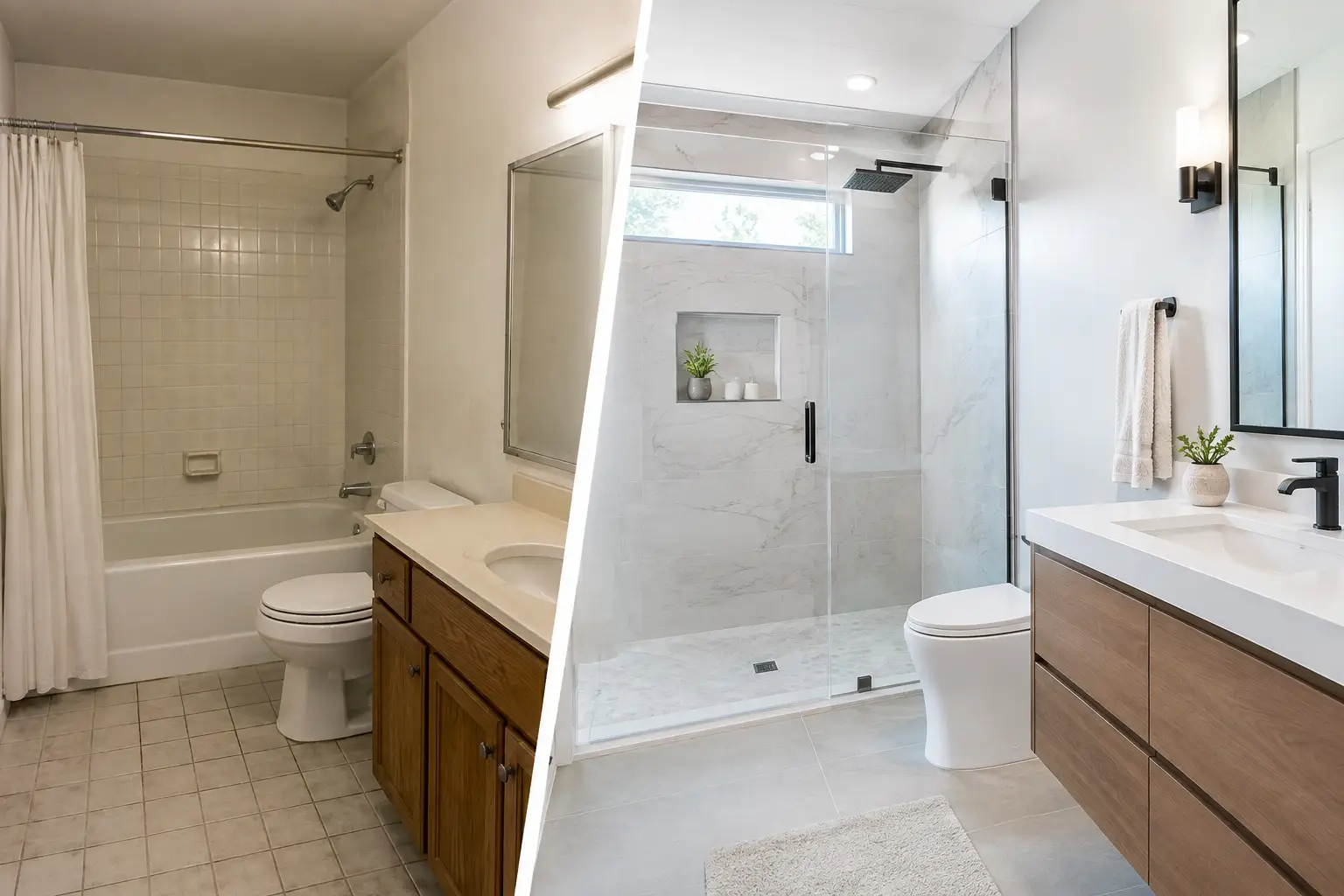
The real test of a bathroom is usually at 7 a.m. Can two people get ready without competing for one outlet, one mirror, and a few inches of counter space? A successful bathroom remodel transformation solves those daily frustrations while giving the room a finished look that feels right for the home. It is not simply a matter of replacing tile or installing a new vanity. The best results come from thoughtful planning, careful preparation, and workmanship that holds up behind the walls as well as in plain sight.
A bathroom remodel transformation starts with function
Many older bathrooms in Macomb County and Metro Detroit homes were built for a different routine. They may have limited storage, poor lighting, worn flooring, a cramped tub surround, or fixtures that no longer perform well. Some have layout problems that homeowners have worked around for years: a door that hits the vanity, a toilet placed too close to the shower, or a vanity that leaves little room to move.
Before choosing a paint color or a shower tile, identify what is not working. A growing family may need better storage and durable finishes that are easy to clean. Empty nesters may want a larger shower with a low threshold and a built-in bench. A homeowner preparing to sell may prioritize a clean, modern update that improves appeal without rebuilding the entire room.
The right scope depends on the condition of the existing bathroom and the goals for the space. In some cases, a targeted update can make a meaningful difference. Replacing damaged tile, correcting drywall issues, installing a new backsplash or vanity, and improving lighting may refresh an otherwise sound room. In other cases, a full gut renovation is the wiser choice because hidden water damage, outdated plumbing, or a poor layout would limit the value of cosmetic work.
Start with the way you use the room
A good plan accounts for the small details that make mornings easier. Consider where towels, cleaning supplies, cosmetics, and extra toilet paper will go. Think about counter space around the sink, the direction shower doors will open, and whether a new vanity will block a heat register or outlet. These decisions can seem minor on paper, but they affect the room every day.
It also helps to distinguish between needs and preferences. A double vanity may be a priority for a busy household, while a decorative niche may be a preferred finishing feature. Both can belong in the project, but understanding the difference helps protect the budget when choices need to be made.
Plan the work behind the finished surfaces
Beautiful bathrooms depend on work that homeowners may never see. Once a contractor opens walls or removes an old tub surround, issues such as moisture damage, uneven framing, aging supply lines, or inadequate subfloor support can become visible. Addressing them correctly is part of a durable renovation, not an unexpected extra that should be rushed through.
Showers deserve particular attention. Tile and grout are not waterproof on their own. A properly built shower requires sound substrate preparation, a reliable waterproofing system, accurate drain slope, and carefully detailed transitions at corners, niches, benches, and curb areas. Skipping steps may save time at first, but it can lead to leaks, loose tile, mold concerns, and costly repairs later.
Flooring preparation matters just as much. A floor that moves, dips, or lacks the right support can cause tile and grout to crack. The finished tile may look level, but the surface below it has to be evaluated and corrected before installation begins. Detail-focused tile work starts with a stable foundation.
Homeowners should expect straightforward communication if a crew finds a problem during demolition. No renovation can guarantee that every hidden condition will be visible before work begins. What matters is how the contractor responds: explain the issue clearly, outline practical options, document any change in scope, and complete the repair correctly before moving forward.
Choose materials for real life, not only the showroom
A bathroom should reflect your style, but it also has to tolerate water, humidity, cleaning products, and everyday traffic. The material that looks best in a showroom may not be the best choice for every household.
Porcelain tile is a common choice for shower walls and bathroom floors because it is durable, water-resistant, and available in many sizes and finishes. Larger-format tile can create a clean, contemporary look with fewer grout lines, though it demands precise wall and floor preparation. Smaller mosaic tile can work well on shower floors because its additional grout lines provide traction and allow the tile to follow the slope to the drain.
Natural stone can bring warmth and character, but it may require more maintenance and sealing than porcelain. Matte finishes can help conceal water spots and fingerprints, while polished finishes can add brightness but may show more marks. The right answer depends on the amount of natural light, the level of maintenance you are comfortable with, and how the bathroom will be used.
Grout color deserves more consideration than it often receives. High-contrast grout emphasizes a tile pattern and can create a bold graphic appearance. A closer grout match produces a quieter, more continuous surface. For family bathrooms, mid-tone grout may be more forgiving than bright white, especially on floors and shower areas.
Vanity selection should be based on more than cabinet color. Measure for storage, door clearance, plumbing locations, and available walking space. Wall-mounted vanities can make a smaller bathroom feel more open, while a furniture-style vanity may offer more enclosed storage. Solid hardware, quality drawer construction, and a countertop that handles daily use can make a practical difference long after the renovation is complete.
Design for comfort without overbuilding
A bathroom remodel transformation does not need to include every trend to feel special. The strongest designs use a few intentional choices and keep the rest of the room balanced. For example, a large tiled shower, a well-proportioned vanity, and layered lighting may have more impact than adding multiple competing tile patterns.
Lighting is often one of the most valuable improvements. A single ceiling fixture can leave shadows around the mirror, making shaving, makeup application, and other routines more difficult. Combining general overhead lighting with properly placed vanity lighting improves function and creates a more comfortable atmosphere. Dimmers can add flexibility for early mornings and nighttime use.
Storage can be integrated without making the room feel crowded. Recessed shower niches keep bottles off the floor. A vanity with full-extension drawers makes small items easier to reach. A recessed medicine cabinet can add useful storage while maintaining a clean profile. These details are especially valuable in compact bathrooms where every inch needs a purpose.
For homeowners planning to stay in their home for years, it is also worth considering future accessibility. A curbless or low-threshold shower, wider pathways, comfortable fixture heights, and grab-bar blocking installed inside walls can make the space easier to use over time. These upgrades can be incorporated in a way that still looks polished and personal.
Protect the project with clear expectations
A bathroom renovation affects a central part of the home, so professional jobsite conduct matters. Homeowners should know what work is planned, when materials are expected, and how the work area will be protected. Dust control, orderly cleanup, respectful crews, and consistent communication are not extras. They are part of a well-managed project.
The estimate should define the planned scope and make clear which items are included. Ask how changes will be handled if hidden conditions are found or selections change. It is also reasonable to ask about licensing, insurance, experience with tile and waterproofing, and the process for final punch-list items. A contractor who welcomes these questions is demonstrating accountability.
Renovation Innovations approaches bathroom work with this level of care, from small tile repairs to complete bathroom renovations. The goal is to translate a homeowner’s vision into a room that is properly prepared, thoughtfully built, and finished with details that feel intentional.
Your bathroom should make the start and end of each day easier. When planning, materials, and installation are treated as one connected process, the finished space can offer more than a visual update. It can give your home a cleaner, more comfortable, and more dependable place to live.
