









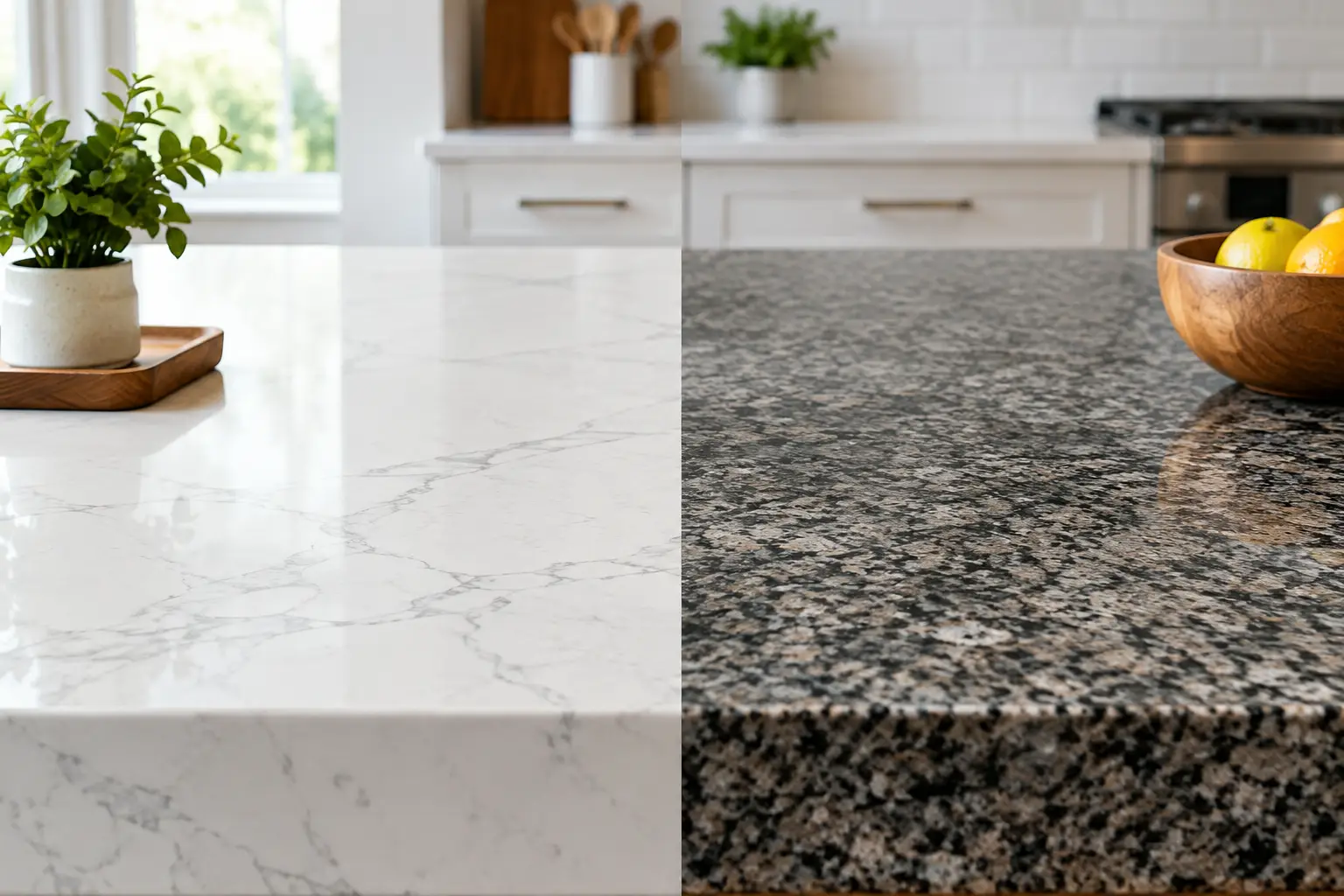
A countertop choice becomes very real when you are standing in a kitchen with cabinet colors selected, backsplash samples on the table, and a budget that needs to work hard. Quartz versus granite countertops is one of the most common decisions homeowners face during a kitchen renovation, and neither material is automatically the right answer. The better choice depends on how your household uses the kitchen, the look you want to achieve, and how much routine care you are willing to take on.
For homeowners in Macomb County and Metro Detroit, practical concerns matter just as much as a showroom sample. A busy family may value easy cleanup and a consistent appearance. A homeowner creating a one-of-a-kind kitchen may prefer the natural movement and character of stone. Looking at the materials beyond the surface helps prevent regret after installation.
Quartz Versus Granite Countertops: The Core Difference
Quartz countertops are engineered surfaces. They are made from natural quartz minerals combined with resins and pigments, then manufactured into durable slabs. Because the color and pattern are designed, quartz can offer a controlled, repeatable look, from soft marble-inspired veining to clean solid colors.
Granite is a natural stone cut from the earth. Every slab has its own mineral composition, veining, flecks, and color variation. Two granite slabs from the same source can still look noticeably different, which is part of the appeal for homeowners who want their kitchen to feel individual rather than uniform.
That distinction affects almost every part of the decision: appearance, maintenance, heat tolerance, and even how slabs should be selected. With granite, viewing and approving the actual slab is especially valuable. With quartz, a sample is often a more reliable representation of the finished appearance, though larger patterns and veining should still be viewed in person when possible.
Appearance and Design Flexibility
Quartz works well when the design calls for visual consistency. It is available in whites, warm neutrals, charcoals, concrete looks, and marble-look patterns that can be difficult to find in natural stone. If you are installing a long run of countertop, a large island, or a matching full-height backsplash, the controlled pattern can make the room feel calm and intentional.
Granite brings depth that is hard to duplicate. Light catches the crystals and mineral variations differently across the slab, giving the countertop a natural dimension. It can be a strong fit for traditional, transitional, rustic, or richly detailed kitchens. It can also work in modern kitchens, particularly when paired with simple cabinetry and a restrained backsplash.
Neither material has to dictate the entire kitchen style. The key is coordination. A dramatic granite often looks best with a quieter backsplash, while a subtle quartz can leave more room for patterned tile or a bolder cabinet color. During design planning, countertop samples should be viewed alongside the cabinet finish, flooring, backsplash, and the kitchen’s actual lighting. A slab that looks bright in a showroom may read differently in a north-facing kitchen.
Durability in a Working Kitchen
Both materials hold up well in residential kitchens, but they react differently to daily use.
Quartz is nonporous, which means it does not need sealing and is highly resistant to staining from common kitchen spills. Coffee, cooking oil, juice, and sauces are generally easy to wipe up. This makes quartz a practical choice for households that want a polished surface with low routine maintenance.
Granite is also durable and scratch-resistant, but it is porous to varying degrees. A properly sealed granite countertop performs very well, yet it needs periodic resealing to maintain its stain resistance. The frequency depends on the specific stone, the sealer used, and how the countertop is used. Lighter or more porous varieties may need more attention than dense, darker stone.
For heat, granite has an advantage. It handles heat better than quartz, although using trivets is still a smart way to protect any finished surface and prevent thermal shock. Quartz resins can discolor, scorch, or crack when exposed to high heat, so setting a hot pan directly on it is not recommended.
Both materials can chip at an edge if struck hard with a heavy pot. This is one reason edge profiles, overhang support, sink cutouts, and installation details matter. A beautiful slab cannot compensate for poor measuring or careless fabrication. Countertops need proper support and precise installation to perform as intended over time.
Cleaning and Maintenance Expectations
Quartz is straightforward to maintain. Warm water, a soft cloth, and a mild dish soap are usually enough for everyday cleaning. Avoid abrasive pads and harsh chemicals, which can dull the finish or damage the resin binders. Even though quartz resists stains, spills should not be left sitting unnecessarily.
Granite also responds well to simple daily cleaning with a stone-safe cleaner or mild soap and water. The main difference is the sealing requirement. A quick water test can help indicate when resealing may be needed: if water darkens the stone rather than beading on the surface, the sealer may no longer be providing adequate protection.
Homeowners sometimes assume granite is high maintenance, but that is not always the case. Resealing is a manageable task when it is done on schedule. Still, quartz is the more forgiving option for people who do not want to think about sealing at all.
Cost: Look Beyond the Price Per Square Foot
Pricing for quartz and granite overlaps more than many homeowners expect. The total cost depends on the slab selected, thickness, edge profile, number of seams, sink and cooktop cutouts, removal of existing countertops, and the layout of the kitchen. An entry-level granite may cost less than a premium quartz, while an exotic granite can exceed many quartz options.
The best approach is to compare complete project estimates, not just material prices. A lower-cost slab can become less economical if the kitchen layout requires extensive fabrication or multiple seams. Likewise, a higher-priced material may make sense when its maintenance profile or design impact better supports the long-term plan for the room.
If you are renovating before selling, neutral quartz often appeals to a broad range of buyers because it looks clean and is easy to maintain. If you plan to enjoy the home for many years, the decision should lean more heavily on what fits your daily habits and personal style. Resale value matters, but living with the result matters more.
Choosing the Right Material for Your Home
Quartz is often the better fit if you want consistent color, minimal maintenance, and strong resistance to everyday kitchen stains. It is especially practical for active homes, bright modern kitchens, and designs where the countertop needs to coordinate closely with a backsplash or wall tile.
Granite may be the better fit if you value natural variation, want stronger heat resistance, and do not mind periodic sealing. It brings character that cannot be copied exactly, making it a good choice when the countertop is meant to be a defining feature of the room.
There are also situations where the answer comes down to one detail. A homeowner who routinely transfers hot cookware from the stove may be more comfortable with granite. Someone installing crisp white cabinets and wanting a predictable soft-vein pattern may prefer quartz. A heavily patterned granite can be stunning, but it may compete with a busy backsplash. A quiet quartz can make a detailed tile backsplash the focal point.
Installation Details That Protect the Investment
Material selection is only one part of a successful countertop project. Cabinet boxes must be level and secure before templating. Wall conditions, appliance clearances, sink style, overhangs, and backsplash thickness all need to be addressed before the countertop is installed. Small planning mistakes can create visible gaps, awkward transitions, or problems with drawers and appliances later.
This is particularly important in older Metro Detroit homes, where walls and floors are not always perfectly straight or level. A detail-focused remodeling team plans for those conditions instead of forcing materials to fit. When countertops, tile backsplash, cabinetry, and drywall repairs are handled as connected parts of the same kitchen renovation, the finished space looks more intentional and functions better.
At Renovation Innovations, the goal is not simply to install attractive materials. It is to help homeowners make decisions that suit the way they live, then carry out the work with clean jobsite practices, careful coordination, and craftsmanship that holds up.
Choose the countertop that makes your kitchen easier to use and more enjoyable to come home to. The right surface should support the full design, not just look good on a sample board.
