









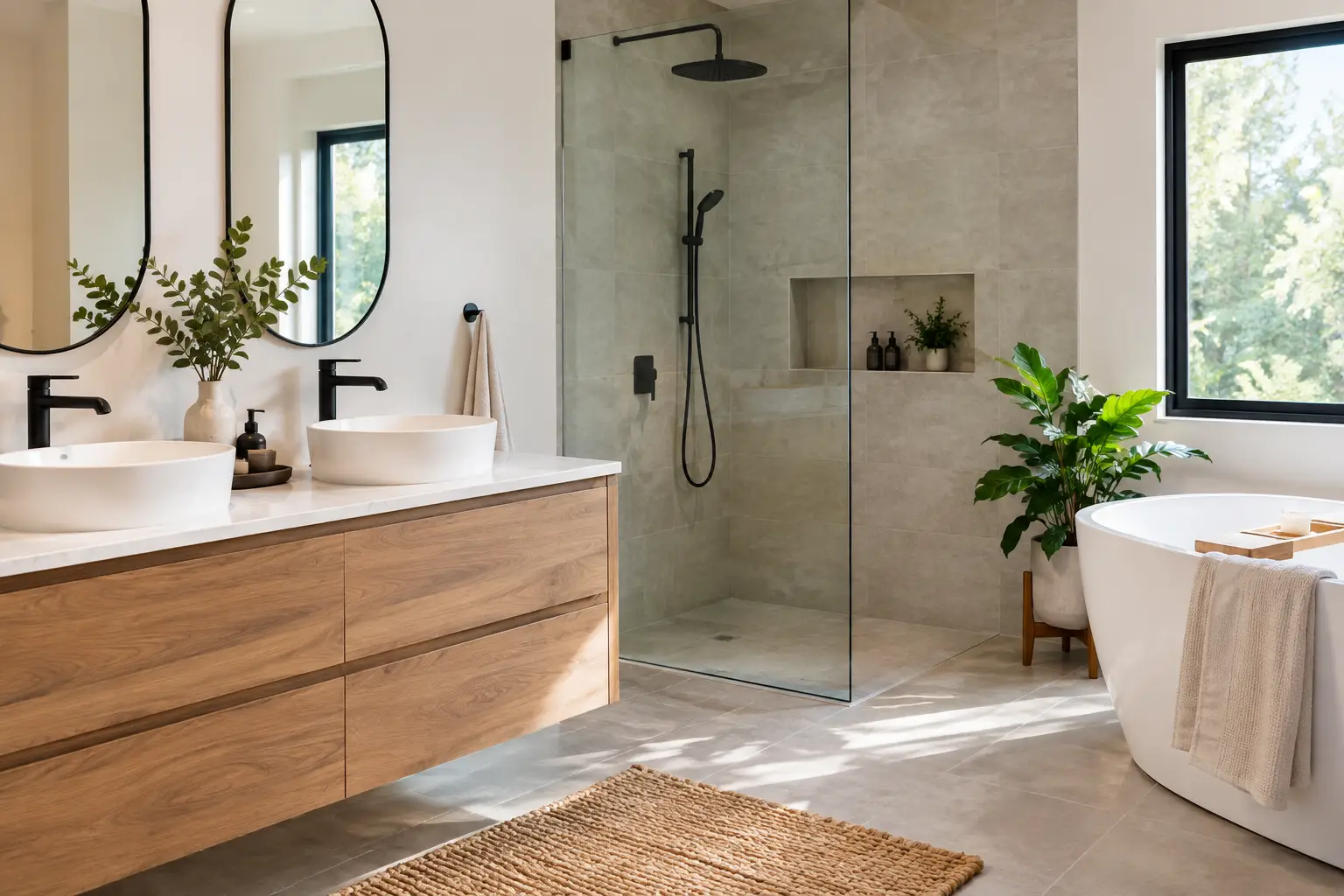
A bathroom can look current in a photo and still be frustrating to use every morning. The bathroom design trends worth considering are the ones that improve how the room functions, holds up to moisture, and fits the character of your home. For Macomb County and Metro Detroit homeowners updating an older bath, that usually means balancing a fresh look with reliable waterproofing, thoughtful storage, and finishes that will not feel dated after a few seasons.
Bathroom Design Trends Built Around Daily Use
The strongest current designs are less focused on matching every finish and more focused on creating a room that feels intentional. Homeowners are choosing calmer color palettes, better lighting, larger shower areas, and practical details that make busy mornings easier. The goal is not to follow every trend. It is to select the right ideas for your layout, budget, and long-term plans for the home.
A well-planned remodel also starts below the surface. New tile and fixtures matter, but so do sound plumbing connections, proper wall preparation, a correctly sloped shower floor, and waterproofing systems installed with care. Those details protect the investment long after the final grout haze has been cleaned away.
Spa-inspired showers with practical details
Large walk-in showers remain one of the most requested upgrades, especially when homeowners are replacing an underused tub or a cramped fiberglass shower enclosure. A curbless shower can create a clean, open appearance and improve accessibility, but it requires careful planning. The floor structure, drain placement, waterproofing, and slope all need to work together before tile is installed.
Many homeowners prefer a low-profile curb instead. It still offers a modern appearance while making drainage and construction more straightforward in certain homes. A frameless glass panel or door keeps the room visually open, while a built-in niche gives shampoo and soap a permanent place rather than leaving bottles on the shower floor.
Multiple showerheads, handheld sprays, and thermostatic valves can add real comfort, but each choice affects plumbing needs and cost. A spacious shower with one dependable showerhead, a handheld fixture, and a properly placed niche often delivers more daily value than a long list of features that the household may rarely use.
Warmer finishes replace the all-white look
White bathrooms are still classic, but homeowners are moving away from rooms where every surface is bright white and glossy. Softer whites, warm greiges, natural oak tones, muted greens, and clay-inspired colors are appearing in vanities, wall tile, and paint selections. These shades add warmth without making a smaller bathroom feel closed in.
Wood-look vanities are particularly popular because they bring contrast to porcelain tile and painted walls. In a bathroom, however, the vanity material and construction matter as much as the color. High humidity, splashing water, and frequent cleaning can quickly damage low-quality materials. Choosing a well-built vanity and addressing leaks promptly helps preserve both the finish and the cabinet structure.
Matte black hardware remains a common choice, but it is no longer the automatic answer for every bathroom. Brushed nickel, warm brass, and bronze finishes can work beautifully when they complement the vanity, lighting, and tile undertones. Mixing metals can also look polished when one finish leads and the second is used sparingly. The key is coordination, not rigid matching.
Tile Trends That Need Skilled Installation
Tile is where a bathroom gains personality, texture, and durability. It is also where precise installation has the greatest impact on the final result. A beautiful tile selection can lose its effect if layout lines drift, cuts are uneven, or grout joints are inconsistent.
Large-format tile and fewer grout lines
Large porcelain tiles continue to be a smart choice for shower walls and bathroom floors. Fewer grout lines can make the room feel larger and simplify routine cleaning. Porcelain is also a dependable material for wet areas because it is dense, durable, and available in looks ranging from stone to concrete to natural wood.
The trade-off is installation complexity. Large-format tiles require flat, properly prepared surfaces. A wall that is out of plane or a floor that is uneven can create lippage, where one tile edge sits higher than the next. Proper substrate preparation is not an optional extra. It is what allows the finished tile to look clean and perform as intended.
Smaller tile still has an important place, particularly on shower floors. Mosaic tile provides more grout joints for traction and can conform more easily to a sloped floor around the drain. A larger floor tile may create a sleek look in the main bathroom area, while a smaller mosaic in the shower provides function where it matters most.
Statement walls with controlled contrast
A feature wall behind a vanity or in a shower is an effective way to add interest without covering every surface in a bold material. Vertical stacked tile can make a low ceiling feel taller. A patterned porcelain floor can give a simple vanity and white shower walls more character. Natural stone-look tile adds movement while offering more predictable maintenance than some natural stone products.
The best statement surfaces are planned with the rest of the room, including mirror size, lighting placement, grout color, and fixture finish. In a compact bathroom, one focal point is usually enough. Too many competing patterns, colors, and textures can make a room feel busy rather than custom.
Storage Is Becoming Part of the Design
A bathroom that photographs well but lacks storage will become cluttered quickly. Floating vanities are popular for their clean, modern profile and the visual space they create below the cabinet. They work especially well in smaller bathrooms, but they should be installed securely and selected with enough drawer capacity for the people using the room.
Deep drawers generally provide better access than a cabinet with a single open shelf. Drawer organizers, pull-out outlets, and dedicated spaces for hair tools can reduce countertop clutter without adding visual bulk. In a shared bathroom, a wider vanity with two sinks may be worthwhile, but only if there is enough counter space and comfortable clearance between users.
Recessed medicine cabinets are another practical upgrade. They add concealed storage without projecting far into the room, although the wall framing and electrical layout need to be checked before finalizing the plan. A well-placed linen cabinet or built-in shelving can be more useful than enlarging a vanity beyond what the room can comfortably support.
Better Lighting Makes Every Finish Look Better
Layered lighting is one of the most valuable bathroom upgrades because it improves both appearance and function. Ceiling lighting provides general illumination, but it rarely eliminates shadows at the mirror. Sconces mounted at eye level on both sides of the mirror offer flattering, useful task lighting for shaving, makeup, and daily grooming.
Backlit mirrors create a soft glow and can support a clean contemporary design, but they should not be the only light source at the vanity. Consider the color temperature as well. Many homeowners prefer warm-to-neutral white lighting that feels comfortable in the morning and does not make tile or paint colors appear harsh.
Dimmers are a small addition with a large payoff. Bright light is helpful when cleaning or getting ready for work, while lower light makes a late-night bathroom visit less jarring. Properly rated exhaust fans are equally important. They remove moisture that can damage paint, encourage mildew, and shorten the life of finishes.
Aging-in-Place Features Can Still Look Custom
More homeowners are planning bathrooms that will remain comfortable as needs change. This does not require a clinical-looking room. A handheld showerhead, a wider shower entry, lever-style faucet handles, and a properly framed location for future grab bars can blend naturally into a modern design.
If a homeowner expects to stay in the house long term, these choices are worth discussing early. Retrofitting them later may mean opening finished walls or replacing tile. Planning ahead gives you more options and often keeps future work simpler.
Choose Trends That Fit Your Home, Not Just the Showroom
The best bathroom design trends should make your space easier to use, easier to maintain, and more enjoyable to come home to. A full renovation may call for a custom shower, new layout, and carefully selected tile. In other cases, replacing damaged tile, updating a vanity, improving lighting, or repairing drywall can make a meaningful difference without changing the entire room.
Before choosing finishes, think about who uses the bathroom, what causes frustration now, and which details need to last. Renovation Innovations can help homeowners turn those answers into a clear plan, with workmanship that respects the visible design and the critical work behind the walls. A bathroom should not just look finished on installation day. It should feel right every day afterward.
